Friday, January 18, 2013

Micromax launches A30 Smarty 3.0 dual-SIM Android phone for Rs. 3,849

micromax-A30-smarty-3.0.jpg

Indian device manufacturer Micromax has added another dual-SIM budget Android phone to its Smarty range. This time it's the A30 Smarty 3.0 priced at Rs. 3,849 available with online retailer Saholic.

The A30 Smarty 3.0 sports a 3-inch TFT capacitive touch display and runs on Android 2.3 Gingerbread. It comes with a 2-megapixel rear camera with LED flash.

Underneath it's powered by a 832MHz Broadcom Processor with 256MB RAM and has 512MB of internal storage with external expansion options upto 32GB via microSD card. The device supports dual-SIM functionality (dual standby) and also features 3G support. It comes with a 1,500mAh battery.

Earlier dual-SIM offerings from the company in the Smarty range include the A25 now available for Rs. 3,550 and the A68 priced at Rs. 6,499.

The A25 features a 2.8-inch display, 1GHz processor, 256MB RAM, Android 2.3.6 and a 1.3-megapixel fixed focus camera. There is no 3G connectivity on the smartphone and both the SIM cards on the phone will only support EDGE. A25 also comes with 1,250 mAh battery, 120MB user accessible storage and support for microSD cards.

The A68, on the other hand, has slightly beefed up specs such as a 4-inch WVGA (480x800) display, 5-megapixel camera, Android 4.0.4 ICS, 1GHz processor with 512MB RAM, 2GB user accessible storage and microSD support upto 32GB, 1,600mAh battery. The A68 also does not have 3G support.

Apart from the Smarty range, the company also offers budget Android phones in the Ninja series namely the A56 Ninja 2, the A57 Ninja 3 and the A87 Ninja 4.

The company's Superfone series include budget smartphones such as the A45 Punk, A80 Infinity and A44 Punk.

Micromax A30 Smarty 3.0 specifications
3-inch TFT (240x320 pixels) 256k colour capacitive touch display
832MHz Broadcom Processor
256MB RAM
512 MB internal storage expandable up to 32GB via micro SD
2-megapixel rear camera with LED Flash
3G HSDPA (7.2 Mbps), Bluetooth 2.0, Wi-Fi 802.11 b/g/n, GPS, Micro-USB
Dual-SIM (GSM + GSM) with dual standby
1500 mAh battery
Android 2.3 (Gingerbread)

Nokia Lumia 610 review

lunia610-display.jpg

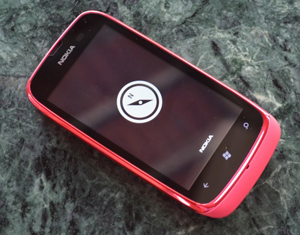
nokialumia610-maps.jpgNokia is looking to make a comeback in the smartphone market by pinning its hopes on Windows devices. Initially revealed at the Mobile World Congress this year, the Lumia 610 hit Indian shores in July. The Nokia Lumia 610 is the most affordable Windows device from the Finnish handset maker. But the question is can this inexpensive Windows Phone device offer the same fluid experience as the others in its family? We take a look.

Hardware/ Design
The device sports decent looks that you wouldn't be embarrassed carrying around. We reviewed a magenta-coloured 610, packed in a big blue box with minimalist contents. The more traditional users can opt for White or Black. Cyan is another available colour. Box contents include a charger to be used with the provided Micro-USB cable, a pair of headphones and printed manuals.

On first impressions, the Lumia 610 looks and feels just like the 710 with similar dimensions and weighing about 133 grams.

The device has tinted chrome edges gives a metallic illusion but is plasticky. It does have a sturdy build and fits comfortably in the hands. The design is such that the front and back sort of lock into each other, hinting at a chin below the screen.

The power button is located on the right along with the volume rocker and a dedicated shutter button. Most of us are more used to the power/wake button positioned on the top. It does get a bit uncomfortable when it is placed on the side.
final-sides.jpg
Moving on, the top houses the headphones jack and the Micro-USB port. The back features a 5MP camera with LED Flash situated on the top while the loudspeaker grill is at the bottom. The left side of the device and the base are clean with no buttons or ports.

The back panel's matte-finish is easily prone to attract greasy stains and the screen is a fingerprint magnet too. The panel slides off easily to reveal the battery, under which is the micro-SIM card slot.

The front sports the trio of capacitive Windows Phone keys for Back, Home and Search that are spaced out well for single hand use and to avoid accidental button presses.
Overall, the phone has a solid build and offers a trouble-free one hand user experience

The Lumia 610 is powered by an 800MHz processor hosting 256MB RAM. It comes with 8GB internal storage with no option for external expansion. The best you can do is make use of the 7GB free storage offered by SkyDrive.

Display
The Lumia 800 has a ClearBlack AMOLED panel, while the 710 sports a ClearBlack TFT. But the cheaper Lumia 610 has neither.

The device has a 3.7-inch LCD screen with a WVGA resolution translating into a pixel density of 252ppi (480x800 pixels). Text is clearly visible and the graphics look decent and smooth too.

But the phone has major issues under the sun, with the screen looking pretty dull. At maximum brightness levels, colours seem washed out, though readability improves, but not much. Since the screen is highly reflective, you'll find yourself using your palm to cover the screen.

Camera
The Lumia 610 is equipped with a 5MP camera with LED flash. The dedicated camera button is placed on the right. A gentle half-press will bring out auto-focus while long pressing the button will activate the camera even when the phone is locked. You can manually focus by just tapping an area on the screen.

Colours of images appear washed out and those taken under low light are noisy. Though videos are smooth with the auto-focus working well here, they only produce VGA quality. The 710, on the other hand, is capable of sharp 1280x720 videos.
lumia610-video.jpg
Using zoom on the device decreases the detailing in the images. Shots appear really blurry. It's advisable not to use the zoom. There's an 'auto-fix' feature that comes quite handy to brighten shots taken in the dark or under low light.

Basic camera settings are accessible once the app is launched including Scene mode, White Balance, Flash, ISO settings and more. There is no front camera on the device.

Software/ Interface
The Lumia 610 runs on Windows Phone 7.5. Initially called Refresh, Windows Phone 7.5 got updated to Tango at this year's Mobile World Congress. The idea of the update was to power Windows Phone devices with lower hardware specs.

Waking up the phone reveals the lock screen, which is entirely covered with the wallpaper of your choice, also displaying the date and the time. In case you've set reminders or calendar events, those appear too along with email notifications and missed calls. The signal strength and the battery indicator are displayed on top.

lumia610-people-hub.jpgSwiping up brings the rather crowded home screen with various applications in gigantic tiles laid out vertically. The device features the live-tile Metro user interface with two customizable home screens. You can change the order of the tiles as per your liking. A swipe to the left launches a second screen with the phone's stock applications. Any of these can be pinned to the start screen by long pressing a particular app and choosing the 'pin to start' option.

The settings screen and search page are clones in terms of the design. There's a search bar at the bottom of the screen, making it easier to browse new pages. A list of options, including tabs, recent pages and favourites are accessible by tapping a button on the bottom-right. This screen also enables you to add a page to your favourites, pin it to your home screen or share it on social networks. Bookmarks are shown as a text list, while tabs are displayed as an image of each open page.

The Marketplace tile shows available updates while the Photos tile displays a slideshow of your pictures. You can view all installed apps under Applications, which are alphabetically sorted. A search button integrated within allows you to find apps more easily.

Switching between apps is easy. Just hold down the Back key and scroll horizontally to jump into any one of them. However, the list keeps refreshing as the older apps disappear and are replaced by the more recently used apps. Killing these apps is not possible.

The Messaging application on the Lumia 610 has some interesting options to give you a satisfying experience. Social network integration allows for easy swapping between messages, Facebook chat or any other chat clients on your phone. All these messages appear as one single thread.

Windows Phone 7.5 also has a voice assistant that can be used for dictation; get replies to be read out to you or to begin searches.

Apps such as Office and SkyDrive together are a powerhouse of productivity. Office helps you to create, view and edit documents stored on your device as well as those in the cloud. With SkyDrive, documents between your phone and PC sync automatically.

Viewing and editing documents in Office is absolutely free and integrated into the OS. Word and Excel docs come with viewing and editing support but PowerPoint files are for viewing only. SharePoint collaboration for Word and Excel files allows you to attach those files to emails, though you need to do that from the Office hub and not the e-mail editor.

Microsoft's note-taking application OneNote, is very easy to use and lets you add photos and voice memos which can then be sent via email. You can also sync OneNotes with your SkyDrive or Windows Live account to access them from anywhere.

Other pre-installed apps include Nokia Maps and Nokia Drive and both functioned pretty well. While the asnokialumia610-maps.jpg it can get. The voice-guided app lets you zoom in and out depending on your preference to see more details of the road ahead.

Whenever you approach a turn, it is indicated at the top of the screen in big, easy to read white lettering with a viewable icon noting the turn. The bottom of the screen shows the time remaining and current speed, which appears to the left side of the screen in portrait mode. Nokia Drive also lets you view downloaded maps in offline mode.

It is worth pointing out that the Nokia Lumia 610, like other phones running Windows Phone 7.5, will not get the Windows Phone 8 upgrade, so they stand to miss out on a lot of great features. Instead, they will get the Windows Phone 7.8 upgrade, so if you care about being on the latest version of the OS (as you should), you're not going to get that here.

Performance/ Battery life
For being dubbed as the cheapest Windows Phone device, the Lumia 610 delivers a decent performance. It is slow at times, but nevertheless runs smoothly.

Call quality on the phone is good with clear reception with even just one or two bars of signal strength. Connectivity wise, the phone performs well over both 3G and Wi-Fi networks.

The QWERTY keyboard is quite responsive but accidental button presses can't be avoided since it feels squeezed in both portrait and landscape modes. The 1300mAh battery on the device squeezes enough juice to last for almost 2 days.

Storage comes across as a notable flaw in the device. With just 8GB of on-board storage and no support for external expansion, intensive apps with specific memory needs like Angry Birds and Skype won't install. Microsoft is looking to address the issue and states that most apps should deliver a satisfying experience on 256MB RAM devices.

A feature highly missed is the ability to take screenshots. But Microsoft has promised that this feature will be included in its latest Windows 8 version.

Verdict
The Lumia 610 comes with its own strengths and weaknesses. The biggest attraction for the device has to be its price. For an entry level Windows phone, the device can be a hit for prospective buyers. Apart from offering a great battery life, the device gives you almost a holistic Windows Phone experience packed in a sturdy build.

That said, the phone pinches you when it comes to storage and compatibility issues while finding apps that don't run. So app hungry users will be disappointed. The camera is a let down too and serves handy only for emergency purposes. A slight sluggishness is felt when launching apps. Though the handset makes its share of sacrifices, it does deliver a worthwhile user experience.

As we pointed out earlier, there is no upgrade path to Windows Phone 8 for current Windows Phone devices like the Lumia 610, so you may want to wait until Windows Phone 8 devices hit the market (we strongly recommend that).


Nokia Lumia 610 in pictures

Price: Rs. 12,999

Pros
Value for money
Battery life

Cons
No microSD card slot
Poor camera

Ratings (Out of 5)
Design: 3
Display: 3
Performance: 3
Software: 3
Battery Life: 3.5
Value for Money: 3.5
Camera: 3
Overall: 3

Amazon makes MP3 catalog available to iPhone users

amazon-logistics-635.jpg


Amazon said Thursday its 22-million song music catalog was now "optimized" for users of Apple devices, making it easier for iPhone owners to circumvent the iTunes store.

The move is part of a new initiative by the Internet retail giant challenging Apple's dominance of the digital music market.

"For the first time ever, iPhone and iPod touch users can discover and buy digital music from Amazon's 22-million song catalog using the Safari browser," Amazon said in a statement.

"Music purchases are automatically saved to customers' Cloud Player libraries and can be downloaded or played instantly from any iPhone, iPod touch, iPad, Kindle Fire, Android phone or tablet, Roku, Sonos home entertainment system, or any Web browser, giving customers the freedom to enjoy more music, from more devices than any other major cloud music service."

The move comes a week after Amazon launched a service that gives compact disc buyers instant copies of music in the Internet "cloud" in a challenge to iTunes.

Amazon AutoRip provides free MP3 versions of music on CDs bought from the online retail titan.

In the newest announcement, Amazon said its MP3 mobile website for iPhone and iPod touches is built on HTML5, which means customers can make purchases directly from the website.

Amazon offers some deals, including $5 albums, 69-cent songs, and free songs from artists on the rise.

According to research firm NPD, iTunes last year held a 64 percent share of the digital music market and 29 percent share of all music sold at retail. Amazon had 16 percent of the digital market, according to NPD's September survey.

Intex launches Aqua Flash and Aqua Trendy dual-SIM Android phones in India

intex-aqua-flash-trendy.jpg


Intex had announced its plans to launch five new phones by October 2012 in the under 10K segment. The company is lagging behind but the effort continues. After launching the Aqua 4.0 and the Aqua 3.2 dual-SIM Android phones last year, now the company has introduced the Aqua Flash and Aqua Trendy budget Android phones for Rs. 9,500 and Rs. 4,900 respectively.

The Aqua Flash seems to be the high-end smartphone in the Aqua series so far. Running on Android 4.0, the device features a 4.3-inch (800x480) capacitive multi-touch display. It comes with an 8-megapixel rear facing camera with dual LED flash and a 1.3-megapixel front camera as well.

On the inside, the device is powered by a 1GHz dual-core processor and comes with a 2,100mAh battery. Though RAM and internal storage details are currently unknown but external expansion options upto 32GB via microSD cards are available. Connectivity options include 3G, Wi-Fi 802.11 b/g/n, Bluetooth and GPS.

The company is bundling in a free mobile cover and a screen guard with every purchase of the Aqua Flash smartphone.

The Aqua Trendy, on the other hand, comes with a 3.5-inch (480x320 pixels) capacitive touch screen and runs on Android 2.3 Gingerbread. It has a 3.2-megapixel rear camera and a 1.3-megapixel front-facing camera.

The Aqua Trendy is powered by a 1GHz dual-core processor and has a 1,400mAh. RAM and internal storage details remain unknown for this device as well. It does have microSD card support for upto 32GB storage expansion. This is also a dual-SIM device with connectivity options like 2G EDGE/GPRS, Wi-Fi and Bluetooth. It does not have 3G support.

Both these phones come with variou pre-installed apps like Nimbuzz, Saavn, Flipkart, Skype and Facebook. They come in black and white colour variants and are available across various retail outlets in the country.

Intex Aqua Flash key specifications
4.3-inch (800x480 Pixels) Capacitive multi-touch Touch display
1GHz dual-core processor
External storage expansion upto 32GB via microSD card
8-megapixel rear camera with dual LED Flash
1.3-megapixel front-facing camera
3G, Wi-Fi 802.11 b/g/n, Bluetooth, GPS
Dual-SIM (GSM + GSM)
2,100 mAh battery
Android 4.0
Intex Aqua Trendy specifications
3.5 inch (320x480 pixels) capacitive multi-touch display
1GHz dual-core processor
Expandable storage up to 32GB with microSD
3.2-megapixel rear camera
1.3-megapixel front-facing camera
2G EDGE/GPRS, WiFi,Bluetooth
Dual-SIM (GSM+GSM)
FM Radio and sound recorder
1,400 mAh battery
Android 2.3

Tim Cook set to be questioned in Apple, Google hiring case

apple-london-store-635.jpg


Internal emails show that executives at tech companies such as Apple and Google believed that an agreement to refrain from poaching each other's workers would bring real financial benefits, a U.S. judge said on Thursday.

Five former employees of various tech companies have filed a civil lawsuit against Apple Inc, Google Inc, Intel Corp and others, alleging an illegal conspiracy to eliminate competition for each other's employees.

At a hearing in San Jose, California federal court on Thursday, U.S. District Judge Lucy Koh also ordered Apple Chief Executive Tim Cook to be questioned by plaintiff attorneys for four hours.

Koh must decide whether the lawsuit can proceed as a class action, which would give the plaintiffs more leverage to extract a large settlement. Koh said that at the time the no-poaching agreements were forged, top executives felt a collective approach toward hiring was more efficient than dealing with employees individually.

"That, I think, is the biggest problem for the defendants," said Koh, who did not identify the executives. However, Koh also closely questioned a key economic analysis commissioned by the plaintiffs, which the judge said had "holes."

Koh did not rule on the class action issue during the hearing on Thursday.

In 2010, Google, Apple, Adobe Systems Inc, Intel, Intuit Inc and Walt Disney Co's Pixar unit agreed to a settlement of a U.S. Justice Department probe that bars them from agreeing to refrain from poaching each other's employees.

The Justice Department and California state antitrust regulators then sued eBay Inc late last year over an alleged no-poaching deal with Intuit. eBay said the government is wrong, and has not been named as a defendant in the civil lawsuit.

Plaintiff attorneys have estimated that civil damages potentially could run into hundreds of millions of dollars.

In court on Thursday, Adobe attorney Robert Mittelstaedt said the plaintiffs had no evidence that employees were actually impacted by the no-cold call deals.

"It's not in the data," Mittelstaedt said.

In 2007, Apple's Steve Jobs asked former Google Chief Executive Eric Schmidt to stop trying to recruit an Apple engineer, a transgression that threatened one junior Google employee's job, according to a court filing last year. At the time, Schmidt was an Apple board member.

Koh on Thursday criticized attorneys for the tech companies for being too slow to schedule depositions of top executives. Apple attorney George Riley attempted to spare Cook from a deposition, saying that when Cook was chief operating officer (COO) of the company before succeeding Jobs in 2011, Cook had no role in any of the no-hire agreements.

"I find it hard to believe a COO would have no say over salary and compensation for all employees," Koh responded.

Additionally, Google attorneys agreed that Schmidt, now Google's executive chairman, could be questioned by plaintiffs' lawyers on February 20. Executives from several other companies were also scheduled for depositions, including Intel chief executive Paul Otellini.

The case in U.S. District Court, Northern District of California is In Re: High-Tech Employee Antitrust Litigation, 11-cv-2509.

Samsung Galaxy S IV to come with wireless charging support: Report

samsung-good-635.jpg


Rumours surrounding Samsung 's yet-to-be-official Galaxy S IV started floating since September last year. The latest one now indicates that the smartphone will support wireless charging.

Android Authority reports via Korean news site DDaily that Samsung Galaxy S IV will feature support for wireless charging based on the Qi standard as introduced by the Wireless Power Consortium. Amongst Android devices, currently only the Nexus 4 is compatible with the Qi wireless charging standard, though the charging orb for the smartphone isn't commercially available yet.

Nokia has also adopted the feature for its latest flagship devices, the Lumia 920 and 820, that come with their own colourful wireless charging accessories.

The report states that Samsung plans on using an alternate technology based on resonant magnetic coupling that is different from the electromagnetic induction found in the current wireless chargers. It also states that the Galaxy S IV will not come integrated with wireless charging compatibility, but will rather sell the charger and a backplate which is required to enable wireless charging separately.

The reason Samsung is using resonant magnetic coupling is that, at least in theory, it would allow the Galaxy S IV to be charged from a distance of up to 2 meters. In comparison, other smartphones that have wireless charging support right now require to be placed at a distance of no more than 4cm away from a charging pad.

But DDaily also states that Samsung has reportedly developed a wireless charger based on magnetic resonance, but feels that it would be to expensive in the market and hence has ultimately decided to stick with the more standard wireless charging method.

At the moment, there are no official details on the wireless charging accessories or when Samsung is planning to unveil the Galaxy S IV. With MWC taking place next month, it would be great to see a glimpse of the device even though it won't be available till the later half of the year.

As far as rumoured specs on the Galaxy S IV go, the device is being developed under Project J and will indeed come with a 4.99-inch Super AMOLED display with full-HD resolution, giving it a pixel density of 441ppi.

It is also likely to feature a 13-megapixel rear auto-focus camera and a slightly thicker, 9.2mm body. Additionally, murmurs are that the new Samsung Android flagship will run on Jelly Bean and is likely to feature the company's latest Exynos 5 Octa eight-core processor unveiled at CES. The new SoC will be manufactured using a 28nm process as opposed to the 32nm process used by the Exynos 5 Dual, hence claiming to be more power-efficient.

More recent speculations suggest that the Galaxy S IV is the first smartphone in the series to come with the famed S-Pen stylus as seen in it's 5-inch phablets the Galaxy Note and Note II. The stylus as the Korean manufacturer seeks to "unite its Note series with the flagship Galaxy S IV", allegedly confirmed by a quote from a Samsung official.

Byond launches B63 dual-SIM Android 4.1 smartphone for Rs. 12,499

byond-b63-smartphone-colours.jpg

After launching a range of tablets in the Mi-Book series, Byond has now unveiled the B63 dual-SIM Android smartphone in India. The device is available across the country for Rs. 12,499 and can be availed at a best buy price of Rs. 9,999 from online retailer Flipkart.

The smartphone runs on Android Jelly Bean (v4.1.1) sporting a 4.5 inch qHD (960x540) TFT capacitive touch display. It comes with an 8-megapixel HD autofocus rear camera and a VGA front camera as well.

Internally, the B63 is powered by a 1.2 GHz dual-core processor with 512MB RAM. It has 4GB of internal storage with external expansion support upto 32GB via microSD card. The device boasts connectivity options like Wi-Fi, 3G, Bluetooth 4.0, GPS and comes with a 2,000mAh battery.

The dual-SIM smartphone is available in black and white colour variants. The company is also offering a complimentary carry case and screen guard with every purchase.

The company recently ventured into the phablet category with the 6-inch Phablet PIII. Some features include Android 4.0, 8-megapixel rear and VGA front-facing cameras, 1GHz dual-core processor and a 2,500mAH battery.

The company also has many 3D-based Android tablets in its Mi-Book series, which debuted in October last year. They come in varying screen sizes of 7-inch, 9-inch and 10-inch screens priced between Rs. 4,300 and Rs. 11,000 and include the Mi1, Mi2, Mi3, Mi5, Mi7 and Mi9.

The Mi-Book Mi 7 with Android 4.0 has been added recently featuring a 7-inch capacitive touch screen with a 1024x600 pixel resolution. Other specs include a 2-megapixel rear camera and a VGA front-facing camera, 1.2 GHz dual-core processor with 512MB RAM and 3,200mAh battery. The tablet is priced at Rs. 11,499.

Byond B63 key specifications
4.5 inch qHD (960x540) TFT capacitive touch display
1.2 GHz dual-core processor
512MB RAM
4GB internal storage expandable upto 32GB via microSD
8-megapixel HD autofocus rear camera
VGA front camera
Wi-Fi/3G/Bluetooth 4.0/GPS
Dual-SIM (GSM+GSM)
2,000mAh battery
Android 4.1.1 Jelly Bean

Thursday, January 17, 2013

HTC Droid DNA review

htc-droid-dna-635.jpg


Over the past few years, smartphones have gradually gotten bigger and tablet computers have gotten smaller. So it should come as no surprise that devices in between are starting to emerge.

These Android devices, informally known as phablets, are better described as giant phones than baby tablets, as they can be used for phone calls. And for now, they aren't much bigger than regular phones.

The larger screens - measuring 5 inches or more diagonally make the devices slightly better for watching movies, reading books and consuming other media. They can also make the phones bulkier to carry - or so I thought.

I was pleasantly surprised when I took HTC Corp.'s new 5-inch Droid DNA phone out of the box. The DNA looks about the same size as my 4.8-inch Samsung Galaxy S III, one of the largest and most popular phones out there. I had to find a ruler to make sure I wasn't sent the wrong phone.

HTC succeeds by making the DNA taller rather than wider, which is important because the width is what spans your palm when you're holding it. Samsung Electronics Co.'s 5.5-inch Galaxy Note II feels too big in my hands - more on that later.

The DNA is, in fact, a tad narrower than the S III, not enough to be noticeable, while being less than two-tenths of an inch larger on its longer side. The DNA is slightly thicker and heavier than the S III, though.

I didn't believe I'd notice the small increase in screen size until I watched "Ice Age" on both the DNA and the S III side by side. But the difference is small. Although watching a movie on a DNA beats doing it on the older iPhone's 3.5-inch screen or even the 4 inches on the new iPhone 5, it isn't the same as watching it on a 7-inch or 10-inch tablet computer. Get a real tablet if size matters to you.

In most apps, I don't actually get more content with the bigger screen. Text and graphics in Gmail messages simply get slightly bigger on the DNA. Google's maps are larger, but that doesn't mean you see more surrounding area, just bigger parks and road names. Amazon's Kindle app squeezes in an extra word in a line here and there, but you lose those gains once you reach the next paragraph.

The exceptions I spotted
Google's Play Books app for reading e-books
The text appears about the same size on the DNA and the S III, meaning the app can fit a few more lines on the DNA device.

Facebook
The app shows a tad more on the DNA when placed on its side like a movie screen. Side by side, it could mean seeing a bit more of a photo on the DNA, but it's not enough to fit in an extra post from someone whining about a morning commute - you'd have to scroll down for more status updates like that. Strangely, I get less on the DNA when using Facebook with the phone held like a skyscraper. A black horizontal bar serves as a menu for settings and other tasks; on the S III, that menu button is built into the hardware and doesn't take up screen space.

Because the DNA's screen is only slightly bigger than the S III's, I can see why I'm not getting more content, just larger text, images and video. I figure I'd need the Note and its even larger screen to get all that. After all, on a tablet's 7-inch or 10-inch screen, I'm seeing much more, not just everything bigger.

But in my tests, everything just gets bigger on the Note compared with the S III. I'm seeing the same number of emails, the same coverage area for maps and the same amount of text for e-books. Think of it as moving a movie projector back so that the movie projects onto a larger area. You're not actually improving the quality or the size of the source material, the film. And if you move back far enough, what's shown on the screen starts to degrade.

I see that degradation watching "Ice Age." The video just isn't as sharp on the Note.

I soon discovered the reason: The S III and the Note both have the same number of pixels, those tiny dots that collectively form text and images on a screen. Both displays are 1,280 by 720 pixels, which translate to 306 pixels per inch on the S III and 267 on the Note II. So the Note simply stretches the same amount of display information onto a wider area. That's a shame, as it negates much of the benefits of a larger screen.

By contrast, the DNA's display is 1,920 by 1,080 pixels, or 440 pixels per inch. That's among the best out there. The iPhone 5, by contrast, is at 326 pixels per inch.

That said, both Samsung phones have richer colors than the DNA, thanks to a screen that uses organic light-emitting diodes, rather than a standard LCD. Although video on the DNA is sharper, color isn't as vivid as it is on the S III or the Note. Still, the DNA's screen trumps that of many other phones, and video looks great if you're not watching a movie next to a Samsung phone.

Available from Verizon Wireless for $200 with a two-year service agreement, the DNA also has a front-facing, videoconferencing camera that's among the best, at 2.1 megapixels. Its rear camera, for taking photos and video, matches the 8 megapixels that other major phones have. Sound comes out well thanks to the DNA's use of Dr. Dre's Beats Audio.

As for the Note, it has a fine-tip stylus that can be used to add a handwritten signature to an email, circle an important event on your calendar or doodle on a virtual notepad. The on-screen keyboard has an extra row for numerals, so you don't have to keep toggling between letters and numbers when writing messages or entering passwords. The Note is available from a variety of carriers starting at $300 with a two-year contract.

Both are decent phones, but not for their distinguishing feature - the size. The increase in size is barely noticeable on the DNA and annoying on the Note, which feels even bulkier with a built-in cover. It keeps bouncing in my pocket when I'm running, then feels as if it would slip out of my hands once I take it out. Checking voice mail feels awkward. The Note is also one-third heavier than the S III.

Here's a case of trying to be too much. A phone is a phone and shouldn't try to grow into a tablet. After all, you don't see too many people hold up an iPad to their ears to make phone calls, even though you could with Skype and other calling apps.

With the Note in particular, you get the annoyances of a tablet (something too big to easily carry around) and little of the benefits (fitting more content on the screen). Get the Note for the stylus, but not for the screen. Likewise, the DNA doesn't offer much in terms of screen size beyond other phones out there. Get the DNA for its sound quality or screen resolution, but not for the size of the display.

There are sure to be bigger phones to come, and I hope they will offer more than just content shown bigger. App developers may have to do their part by designing their programs for varying screen sizes. Both the DNA and the Note have good features that set them apart from rivals, but size isn't one of them.

Analyst predicts Apple's 2013 product lineup, includes new iPad mini, iPhone 5S

apple-2013-product-lineup.jpg

Earlier this month we saw analysts Brian White and Peter Misek coming up with their research findings stating Apple will release the new iPhone in multiple colours and sizes.

Now KGI Securities analyst Ming-Chi Kuo, who has been pretty accurate as far as Apple's product plans are concerned, has now offered his predictions stating that Apple will launch the majority of its new products in the third quarter of this year.

According to MacRumours, the analyst's predictions not just offers a general glance at Apple's products but all kinds of detailed specs about them. He begins with the iPhone saying that the next-gen iPhone will be called iPhone 5S, which will be identical to the iPhone 5 and will feature a faster 28-nm A7 chip, a fingerprint sensor, smart LED flash and an enhanced camera with f2.0 aperture. The phone is expected to be available in two colours, just like the current iPhone. (Also See: New iPhone, iOS version spotted in app usage logs)

Peter Misek's research findings offered more details about the iPhone specs that include a new super HD camera/ screen, a better battery and NFC along with an IGZO screen for Retina+ and 128GB storage.

Kuo further adds that there will also be a low-cost revamped iPhone 5 priced between $350 to $450, sport a slightly thicker (8.2mm) plastic encasing and will be available in six colours.
apple-iphone5-predictions.jpg
In his report, Misek mentions a budget iPhone offering at a $200-$250 price point on an "unsubsidised basis", but claims that the project has not yet been given the go-ahead.

Moving on, Kuo forecasts that the next generation iPad and iPad mini will be launched in Q3, with the iPad mini receiving a Retina display. The new iPad is expected to get a design makeover sporting slimmer bezels as seen in the iPad mini.

Kuo predicts that the fourth-generation iPod touch will be scrapped and Apple will launch a toned-down fifth-generation model with a lower 8GB storage and no rear camera at about $199.

As far as MacBook Pros are concerned, Kuo believes that the non-Retina display models will be done away with this year, featuring just an all-Retina display lineup with minor design tweaks at cheaper prices. He further adds that the MacBook Air will not get a Retina display, courtesy its design, but the processor might see an upgrade.

Similar will be the case with iMacs, which won't see a Retina display this year. He forecasts a shift to the Haswell platform for the iMac and Mac mini in Q4. Kuo feels that Apple TV will get minor enhancements but offers no additional details. However, he notes that Apple's highly anticipated launch of a branded television in 2013 is unlikely due to content issues and lack of television industry experience.

LG Optimus G2 may debut this fall with Android Key Lime Pie: Report

lg-optimus-g-front.jpg


The successor to LG's flagship Optimus G smartphone may launch this fall, reports CNET. The report also highlights the possible reason for delaying the device's launch, considering it's been rumoured to exist for quite a while.

LG might be waiting for Google to release its latest version of Android (currently known as Key Lime Pie), which is expected to come in May, probably at the Google I/O event. That would give the Optimus G2 an edge over other Android-powered devices.

Specs wise, previous rumours for the Optimus G2 indicate that the smartphone will feature a 5.5-inch full-HD display, a quad-core 2.0/2.5GHz Krait processor, at least 2GB RAM, a 13-megapixel camera and support 3rd generation LTE radio.

The fact that LG did not showcase the device at CES this year, MWC would be a good opportunity for the Korean manufacturer to take the wraps off of the smartphone.

Recent murmurs suggest LG is planning to launch a full-HD smartphone in the first quarter of 2013. Codenamed 'GK', the device is expected to feature a 5.5-inch screen and run on a quad-core processor.

Other reports analyse that LG's main objective behind launching a full-HD smartphone in Q1 2013 is to be able to garner greater market share than its rivals. The company feels that having its product in the market before the Samsung Galaxy S IV or the next generation iPhone will give it a slight edge in terms of sales.

LG entered the phablet territory with launch of the Optimus Vu and a subsequent successor, the Optimus Vu II with 5-inch IPS displays.

2013 is expected to be the year of the phablet, but looks like it will also be the year of full-HD displays companies like HTC, Huawei, Sony and ZTE already having announced their full-HD smartphone offerings.


LG at CES 2013